
Bitcoin Tech Talk #304
This is a paid newsletter. If you’re an open source contributor to Bitcoin projects, please email me with your contributions and I will give you complementary subscription.
What I've been working on

Fiat Politics - My column on Bitcoin Magazine was about politics and how much everything becomes politicized because of fiat money. The more I investigate human behavior, the more I realize it’s corrupted by fiat money’s burger today being paid for on Tuesday. The zombies that lurk in the economy continue sucking the life out of civilization itself and politics is the reason.
NYT on Maxis - I got quoted on this one and despite their anti-Bitcoin stance over the years, it’s actually a pretty good article featuring Cory Klippsten. This is a surprise given how terrible NYT’s coverage on Bitcoin has been over the years, especially with Nathaniel Popper. I fully expect the declaration that Bitcoin Maximalism is dead over the next years, even as it gets stronger. They can’t really do the same with Bitcoin, so this is the next narrative.
Fedi with Obi - My interview with Obi Nwusu about Fedi is finally out. As usual, the podcast was more focused on his history and starting businesses, but we also talked about his newest venture. His history in this space and his vision for the future were pretty apparent. I think most of what altcoins claim to solve are much better done by some form of Chaumian e-cash system and I think he’s about to show that.
What I'm up to

Scotland - I’ve been hanging out in London this past week and I’m about to go off to Scotland! I especially enjoyed the Royal Mint at the Tower of London and the history of money exhibit in the British Museum. I may check out the Bank of England museum before I leave London, but I would love suggestions on what I could go visit in Edinburgh or Glasgow.
Listener Questions - I want to record a listener questions podcast, which I haven’t done in a while. Please post some questions there if you have anything for me. It’s always fun having doing these, and it’s the first time I’m asking on Stacker News.
Podcast with David Perell - I have another podcast coming up in a week or two about curiosity, motivation, and improving yourself. He’s a really good writer who’s had a lot of success online and the conversation was a lot of fun for me. I also got to record in his studio, which taught me a few things about various design features. I’m not really into design, per se, but I am starting to appreciate it a lot more as I travel, especially classical architecture.
Tweet of the Week

What I’m Shilling

Unchained Capital is a sponsor of this newsletter. I am an advisor and proud to be a part of a company that’s enhancing security for Bitcoin holders. If you need multisig, collaborative custody or bitcoin native financial services, learn more here
Bitcoin
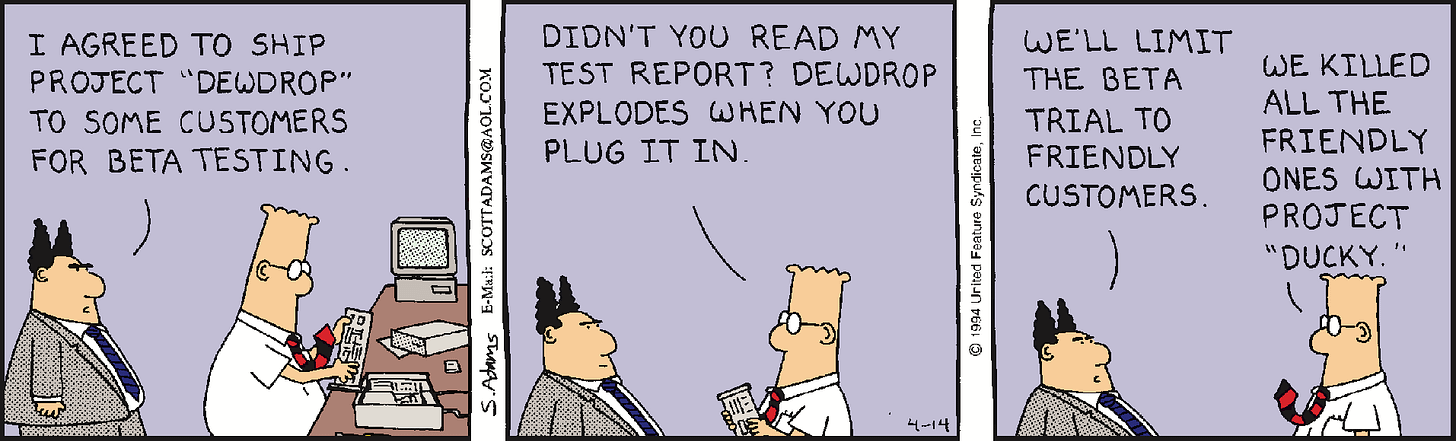
Fuzz Testing - The post from Bitcoin Developer Kit shows how many bugs were discovered using fuzz testing in a relatively small amount of code. The post points out all the benefits of this particular form of testing, which checks all sorts of boundary conditions which a lot of programmers sadly don’t check that well. This is especially important for Bitcoin software, which with subtle bugs can cost people money.
Tapsigner shipping - One of the more interesting products that signs using NFC. I have to say that in London, NFC payments are completely the norm and a deeper integration of this technology in Bitcoin would make the payment process more seamless. I would like to see more of this, especially with Lightning as the communication methods are much better suited for in person payments.
Wasabi Coinjoin traced - The story is about the DAO hacker from 2016, but the real story for me is how Chainalysis managed to trace the DAO money from Ethereum Classic to Bitcoin through a Wasabi Coinjoin. That money was then sent to Grin and mixed there, but was traced according to Laura Shin’s book. I would be more concerned with Wasabi Coinjoins given this story, though the details of what Chainalysis did is not entirely clear.
Lightning

StableSats - Galoy is putting some of their resources behind this project, which is a way to do stablecoin trading using Oracles on Lightning. As they point out, this type of stablecoin does not require banking access or some trusted third party keeping a peg in place. The whole thing requires a contract-for-difference which essentially trades some portion of Bitcoin using an oracle. The idea is sound, but as usual with these things, a liquid market is necessary to make the price not slip too much. I’m not sure exactly how they plan to do this, but I look forward to understanding the details.
Poncho - The project is a zero-cost credit-based lightning channel. The idea is to use this with trusted parties, like your family where you can have family members open a channel with your node for free and give them credit which they can pay later. It’s not as strict as a normal lightning channel since the counterparty is trusted. The channel is still limited by whatever channels are provided by the node, but there’s still a possibility of some nefariousness should these channels be used between non-trusted parties. It’s an interesting concept, though, and will be explored as different trust models arise.
Damus - This is a Nostr based blog, which shares a lot of principles with Lightning. The idea is that it’s not possible to ban this blog by banning a single website, as it can be transferred peer-to-peer. Combining this with Lightning, it’ll be interesting to see if newsletters essentially move to this once it gets more popular. Of course, the reliability of peer-to-peer services tends to be less than centralized services, so I do wonder how much of that people are willing to tolerate.
Economics, Engineering, Etc.

How altcoins hurt people - The story here is heartbreaking about people that got scammed into playing Axie Infinity and came out thousands of dollars behind. These are the people that altcoins hurt. It’s the poorest people in the world (the main guy in the story was making $80/month) who end up paying some VC in Silicon Valley.
Complexity enemy of Security - As Jameson Lopp points out, altcoins are extremely complex and end up costing a lot of people money. It’s still a mystery to me why Ethereum’s Turing vulnerability is seen as some sort of feature. Turing completeness is the reason why so many of these smart contracts keep getting exploited. Yet the market doesn’t seem to care. I’ve noticed that for most people, if they themselves don’t lose money, they couldn’t care less about other people losing money on the same system.
Recession and Bitcoin - BitMex speculates on how the current as-yet-unadmitted recession will affect Bitcoin. Their conclusion is that Bitcoin will probably go along with the Macro trends at play rather than decouple from the broader economy. Personally, I think the quantitative tightening is changing the dollar side of the equation as demand for Bitcoin slows as the Fed slows the money printing. Who knows when monetary policy will loosen, but when it does, that’s when I expect Bitcoin to take off.
Quick Hits

CSW gets $1.20 - The number of lies the judge detected are too numerous to count here, so it makes me wonder how he still has followers.
Mining loans under water - Not surprising given the crazy good times miners had in the past 2 years, but they’re probably not the only loans that are underwater.
Solana getting drained - Apparently, there’s a flaw in some wallet that’s causing all these Solana addresses to get drained.
All Fake - Speaking of Solana, their metrics were completely gamed by a couple of people.
Nomad drained - More altcoin idiocy. That there are stories like this every week tells you how terrible security is in these things.
Blackrock and Coinbase - This has corresponded with a stock price increase in Coinbase. Let’s hope that it’s not the prelude to an acquisition.
Fiat delenda est.