Bitcoin Tech Talk #320
What I've been working on

Talk from laBitConf - My talk from laBitConf is up. It’s a shorter version of the article that I wrote for Bitcoin Magazine a couple of weeks ago. Essentially, fiat money ruins civilization because fiat creates a huge incentive to rent-seek and play zero-sum political games instead of producing and creating value.
Anna Tutova Interview - I did an interview with this Ukrainian Bitcoiner in Lugano. I got a chance to reflect a little bit on how I got to the current situation I’m in. Part two of this interview should come in a little bit and if I remember, that was a bit more spicy.
Steve DeAce on TGFB - Conservative Christian political commentator Steve DeAce has been going through Thank God for Bitcoin on his show, doing a chapter a week. It’s interesting how different people get different lessons from the book as a lot of what he talks about during the book discussion on his show are not things I would have thought of.
What I'm up to

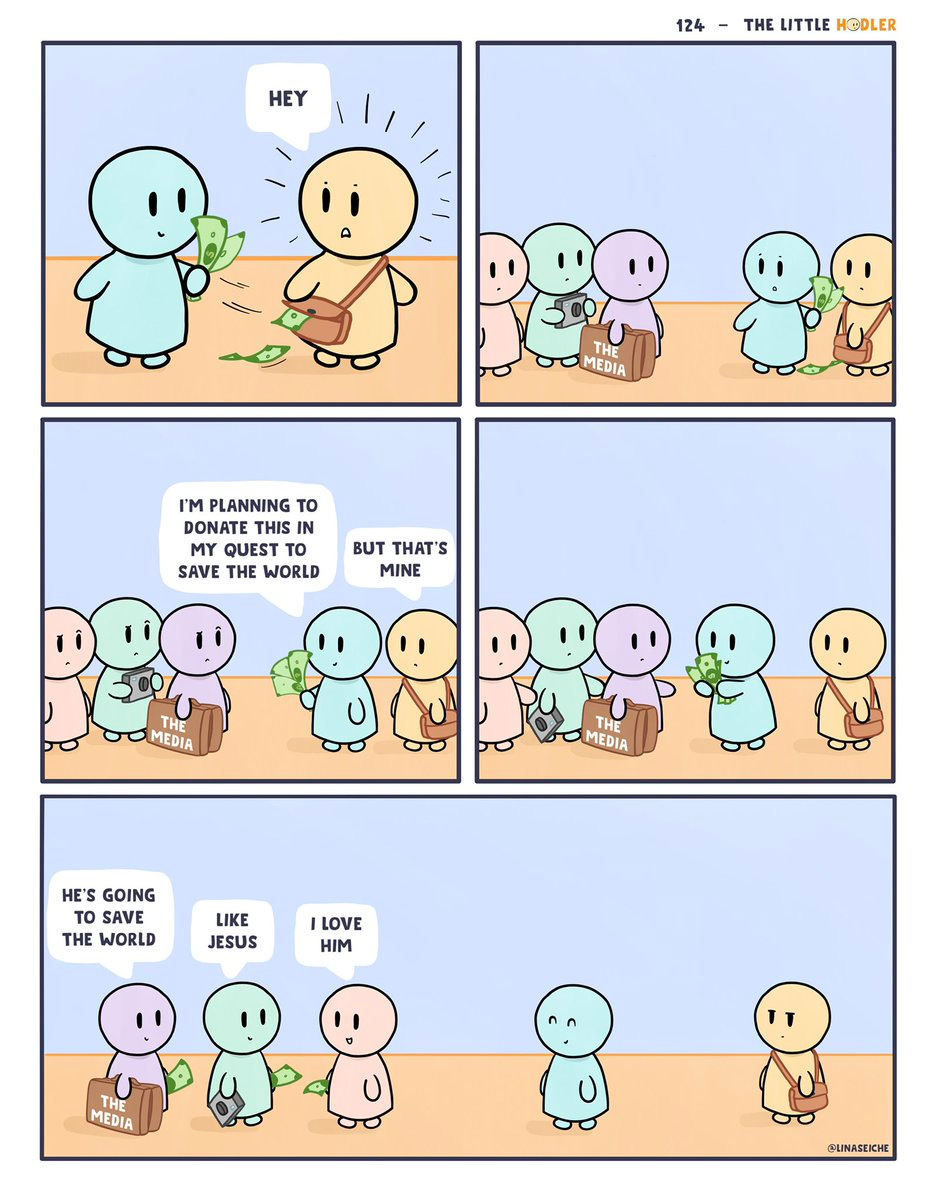
Charity article - It’s due to come out tomorrow on Bitcoin Magazine. And yes, I timed it so it would come out on so-called “Giving Tuesday.” Have you really considered what charities do in an economy? The unintended effects of charities are legion and we really need a better relationship with those that we give to. The article hopefully will get Bitcoiners thinking about charity in a more local way.
Ushuaia - I’ve been in the “Fin del mundo” for the past few days and what an interesting city this is! Despite it being summer here, it’s still very cold. As with all things Argentinian, I’ve been pretty shocked at the inflation the people here experience. When I first came to Argentina a few weeks ago, the blue dollar rate for pesos was 284 to 1 dollar. It is currently 320 to 1. I also saw a menu for a restaurant I was at on Saturday on Google Reviews and saw that king crab was 5000 pesos 7 months ago. It was 10,000 pesos when I went Saturday. My tour guide told me that they experience 70% inflation yearly.
Loosely held beliefs - This seems to be the norm in fiat money economies and I’m exploring why in an article I’m working on. I suspect that when money is abundant, adapting your beliefs to align with the money printer becomes very profitable and thus, more people have malleable beliefs, which is to say that it’s not the result of experience, but of politics. This has some profound consequences on how we progress as a civilization and it’s not good. Bitcoin Maximalism may just be the bringing back of real beliefs.
Tweet of the Week

What I’m Shilling

Unchained Capital is a sponsor of this newsletter. I am an advisor and proud to be a part of a company that’s enhancing security for Bitcoin holders. If you need multisig, collaborative custody or bitcoin native financial services, learn more here.
Bitcoin
0.24 Release - Bitcoin Core 0.24 is out! The release has full replace-by-fee as the main new feature. Making RBF standard should give users more autonomy over when transactions go in without the necessity for CPFP transactions. Miners, of course, are not obligated to take the new transactions, but the economic incentive should prove enough of a competitive advantage over time to make RBF logic worthwhile.
Miniscript and Simplicity - Blockstream has a post on how Miniscript simplifies a lot of the complexity around script, especially around Script analysis. The post talks about how it’s much easier to compose a miniscript than a straight script smart contract. They also intriguingly make the analogy between miniscript and simplicity to bring home the advantages of having a more basic smart contract language. Lastly, they’re creating a bridge between Simplicity and Miniscript, allowing Miniscript to become a subset of Simplicity. This is the direction that smart contract development should take, not the terribly planned and piss poor stupidity like Solidity.
Passphrases - Coinkite’s blog goes through what passphrases are for, where you should think about using them and their security properties. I’ve helped a lot of people recover their wallets and from what I’ve seen, most people don’t use this feature. The main reason being that it’s poorly understood and has the downside of losing your funds if you can’t remember it. Personally, I think passphrases have their place, but only something that’s done as a standard thing for all your seeded wallets. Backing these up should also be a priority.
Lightning
Lightning Diversification - Roy Scheinfeld of Breez makes the case that the Lightning ecosystem has been diversifying as the network grows. I’ve been saying the same thing for the past couple of years that everything will get more specialized as the usage in this space continues to grow. Not everyone uses Lightning the same way, much like how none of us use the internet the same way. The diversity of interests will all get served, and finding those niches will be very profitable.
Mutiny - You can now use your browser to run a lightning node. Browsers can do everything these days, so this is not a surprise. I just wish it would run faster as it takes a while to load on my machine. Of course, there’s a lot of data to go and get and using websockets to connect is clever, though resource-intensive. Which makes me wonder, when will we get the inverse of this product? That is a browser that runs on a lightning node?
PTLCs - The Bitcoin Manual has a nice article on Point Time Lock Contracts and how they differ from Hash Time Lock Contracts. The main benefit is that you can combine some of these contracts because points can be added where hashes cannot. The mathematical properties give more functionality that can be used for innovations. The main drawback is that we need an entirely new network as HTLC lightning nodes are incompatible with PTLC lightning nodes.
Economics, Engineering, Etc.
Hayes on Silbert - Arthur Hayes explains what Barry Silbert’s been doing and why he thinks DCG might be in some trouble. The post is even more hilarious than his usual, but he also has some great analysis on what was likely Barry’s trades the past few years. There’s a lot to learn about how companies hide their losses, and how they get in trouble making bad bets. There’s real risk of contagion here according to Arthur and this is a story worth paying attention to.
NY bans mining - Following China’s lead, New York has banned mining for 2 years. Given their regulatory tendencies, this is not a surprise. This is the state that created the BitLicense and has tracked China relatively closely. It’s a pretty liberal state and becoming more and more regulated over time and is trying to hold onto their fiat power. As NYC is the financial center of the world in many ways, I expect them to lose the most to Bitcoin in the coming years, so in a way, their moves make a certain amount of sense.
Macro Trends - Lyn Alden looks at the many long term indicators that are going in the wrong direction. She’s very detailed in her analysis and the charts in her report alone are worth paying close attention to. As she points out, in the short-term, the tightening will lead to recession, and as a result, over the long-term, there will have to be more easing. That, of course, will mean more inflation and safety in Bitcoin.
Quick Hits
Volcano Bonds - It’s been over a year, but it looks like El Salvador is finally making progress on those volcano bonds.
Bitcoin as Reserve Asset - An academic paper argues for Bitcoin as a central bank reserve asset.
Block’s new wallet - Secure and easy to use. That’s their goal.
Tornado guy still in jail - This isn’t a final verdict, but the government here has no desire to release this guy.
Fiat delenda est.