Bitcoin Tech Talk #327
Interesting Things I’ve Read
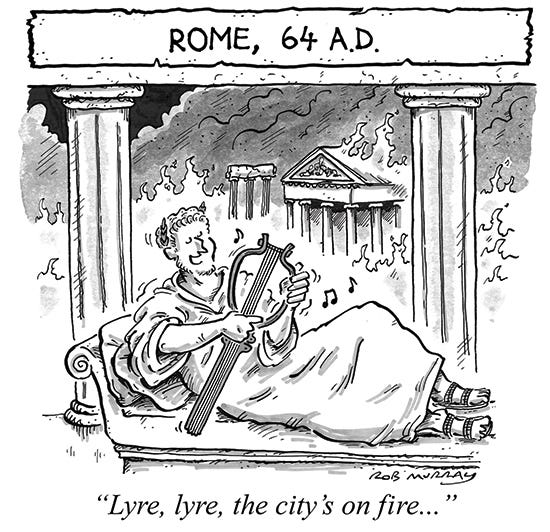
Rome Currency Debasement 4th-5th Centuries - Historians almost always explain Roman Empire’s collapse on anything but the actual reason, which is the monetary debasement and excess government spending that caused it. This article is thorough and goes through the many different emperors’ attempts at financial alchemy through laws, violence and debasement. It’s really sad how little we know of the monetary causes of decline.
How People Think - Really, this is an article on cognitive biases and some good examples of these. If you can understand these points, you can use them as filters on how people perceive the world to get at the truth. Generally, good things come from hard work and virtue, bad things come from trying to cheat the system. It’s a long, but challenging read to examine your own biases.
Pentagon’s Accounting Fraud - Verify, don’t trust. This is a good example of why. So much of the Pentagon’s budget is cloaked in secrecy that much of it goes toward Cantillionaires that we have no clue about. Privacy is a right that individuals should have and public institutions should not. Yet the reverse is practiced in the name of security. I came away from the article demanding that we should audit the Defense Department the same way we should audit the Fed.
What I'm up to

Lebanon - I have finished a week in this wonderful country. Beirut has fast become one of the top 3 cities I’ve visited. Absolutely gorgeous place with pleasant weather, smart people and classic architecture. It’s just too bad that the place has been debased through fiat money printing. Most street lights are dark, cell phone service is expensive and trash services literally stink. Governments can ruin anything. As you might expect, there’s a strong Bitcoin community here for those that are inclined to travel.
Egypt - I’m headed next to Egypt to see some of the most ancient sites in the world! Interestingly, this place is also currently being debased by fiat money printing, the latest machination being the central bank revaluing the currency to be nearer to the black market rate. One of the interesting patterns I’ve noticed is that many of these inflating countries raise the public employee wages frequently, causing a lot of money to enter the economy. The effect seems to be a much more immediate inflation than, say lending more money to banks and hedge funds.
Christianity in the Middle East - One of the most interesting parts of being in the MENA region is the religious aspect. These are some of the holiest sites in the world for Christians, but these are also areas with majority Muslim/Arab populations. What I’ve noticed is that there’s a significant Christian minority in many of these places, often originating from the beginning of Christianity itself.
Tweet of the Week

What I’m Shilling

Unchained Capital is a sponsor of this newsletter. I am an advisor and proud to be a part of a company that’s enhancing security for Bitcoin holders. If you need multisig, collaborative custody or bitcoin native financial services, learn more here.
Bitcoin
Vaults - James O’Beirne has a new take on how to deal with covenants by focusing on what many consider the most useful feature: vaults. He’s written a proposal for creating a new OP code that deals with this specific feature instead of the more complex creation of vaults in the other covenant proposals. The main features of his proposal are that you can specify where the fees come from at unvaulting time, you can reuse the same vaults and you can unvault partially. These are all useful and according to his paper, no covenant proposal has all of these properties. It’s an interesting proposal that’s already getting some scrutiny. We’ll see if it gets traction.
Multiparty Shuffle - Adam Gibson proposed a way to swap a bunch of utxos using adapter signatures and Schnorr in this classic post. This was successfully completed by 3 parties on Signet. What’s really cool about this is that because these are adapter signatures, there’s no trust involved. Moving your share reveals the secret that others need to move their shares. This is an interesting alternative to CoinJoin and as long as the anonymity sets on these get large, this could be an excellent privacy tool.
Full RBF Benefits - Peter Todd explains some of the benefits of full RBF with respect to certain attack vectors which are made more expensive. Specifically, he explains that in any multiparty protocol, there’s some risk that one party sends in a particularly low fee transaction. Without Full-RBF, this can hold up the multiparty transaction, whereas with Full-RBF, the low fee transaction can get replaced. Full RBF has some drawbacks as well, specifically around zero-conf transactions, which was what he was responding to.
Lightning
LN Node Operator Resources - This is a compiled list of resources useful for running a node. That there is this much content and experimentation shows just how far Lightning has come. This isn’t a guide for users, it’s for node operators who are trying to earn money through routing. I honestly think there could be a good book written about this as I believe that doing a good job here will bring in good revenue in the future.
Channel.Lightning - One of the hardest things for any node operator to figure out is whom to open channels with. Now there’s a tool for that. You can enter your pubkey and you will get a set of recommendations for whom to open channels with. There’s probably some sort of fancy graph analysis going on in the background and I expect these sort of services to not be free in the future.
Torq - Is a lightning node capital management tool that’s available now as a docker container! If you’re a router and want to manage how much you’re making this is a tool to help you do that. One of the amazing incentives of lightning is that routing nodes can get paid for helping payments complete, and anyone can do it! As the network grows, I imagine some sort of automation here will become a thing, especially if AI can help figure out the right channels to open and so on. The problem seems definitely ripe for some sort of neural network.
Economics, Engineering, Etc.
El Salvador Law - The new law in El Salvador gives regulatory clarity around Bitcoin and also paves the way for the Volcano Bond. The Volcano bond has long been coming and the market has turned quite a bit since they announced it. That said, there’s probably a good market for these and we’ll see how this pans out. What’s clear is that El Salvador really wants to lead the way and they’re doing their best to attract money and talent to their country.
Nostr Bet - Hive VC explains why they’re betting big on Nostr. The main argument for Nostr and why it’s poised to grow big given how much of a need it seems to be filling at the moment. The main point is that it’s a protocol, not a service, which is in many ways the difference between Bitcoin and fiat money and altcoins. There’s a natural network effect of protocols that services have to work very hard at getting.
SEC charges Genesis/Gemini - In the first of hopefully many, the SEC has charged both Genesis and Gemini of creating an unregistered security. It’s hard to know why they chose these two companies, but at least part of it seems to be to establish a precedent. Gemini has been embroiled in a dispute with DCG about their Earn program, so there’s probably some consideration for the fact that so many people got screwed over. Just wait until they go after altcoins.
Quick Hits
GBTC Contagion - Every failed yield scheme can be traced back to GBTC.
DCG Update - According to Barry, everything is going to be fine. Let’s just say that a lot of people don’t believe him.
Defending a Fixed Money Supply - A fixed money supply is a boogeyman of Keynesians. This article refutes it.
Silvergate’s Fall - There’s a nice timeline of all that happened with respect to Silvergate’s fall from grace.
US Debt Future - Debt numbers by government are staggering. And it’s not going to improve anytime soon.
Fiat delenda est.