
Bitcoin Tech Talk #335
Interesting Stuff

Housing Analysis - The post is written as an analysis of using housing as an investment. The right questions are being asked in it. For example, how do you get houses to people that want to live in them and not invest in them? He likens housing to a pyramid scheme based on the scarcity of land. The conundrum is that new buyers can’t get in because it’s used too much as an investment vehicle, but making prices go down would destroy a lot of wealth. What he’s describing without knowing it is that houses have too much of a premium due to its being a store of value. I honestly think Bitcoin Fixes This.
Being Known - Having had an actively following on Twitter for 6 years, I related a lot to this one, though, I’m probably not as sensitive to criticism as the author is. The main gist of the article is that there’s a lot of benefits and drawbacks to showing yourself online, but that the benefits outweigh the drawbacks as you show more of yourself. I’m thankful that I’ve been able to become friends with so many people in this community and being known in that way. The post is an excellent summation of what it means to find a tribe, though the author doesn’t put it that way.
Christian COVID Analysis - I’ve been pretty frustrated with Christian leaders basically genuflecting to the state on everything without the least hesitation. Especially as I’m reading Robert F. Kennedy Jr.’s book, I can’t help but think that the emphasis on compliance to authority was horribly mistaken at best and devilish at worst. The article was a welcome counterexample to what I’ve seen and gave voice to what I had been thinking about for the last 3 years. The brain-twisting biblical justifications were not the final word on Christian responses to COVID and you can be Christian while opposing unjust state mandates.
What I'm up to
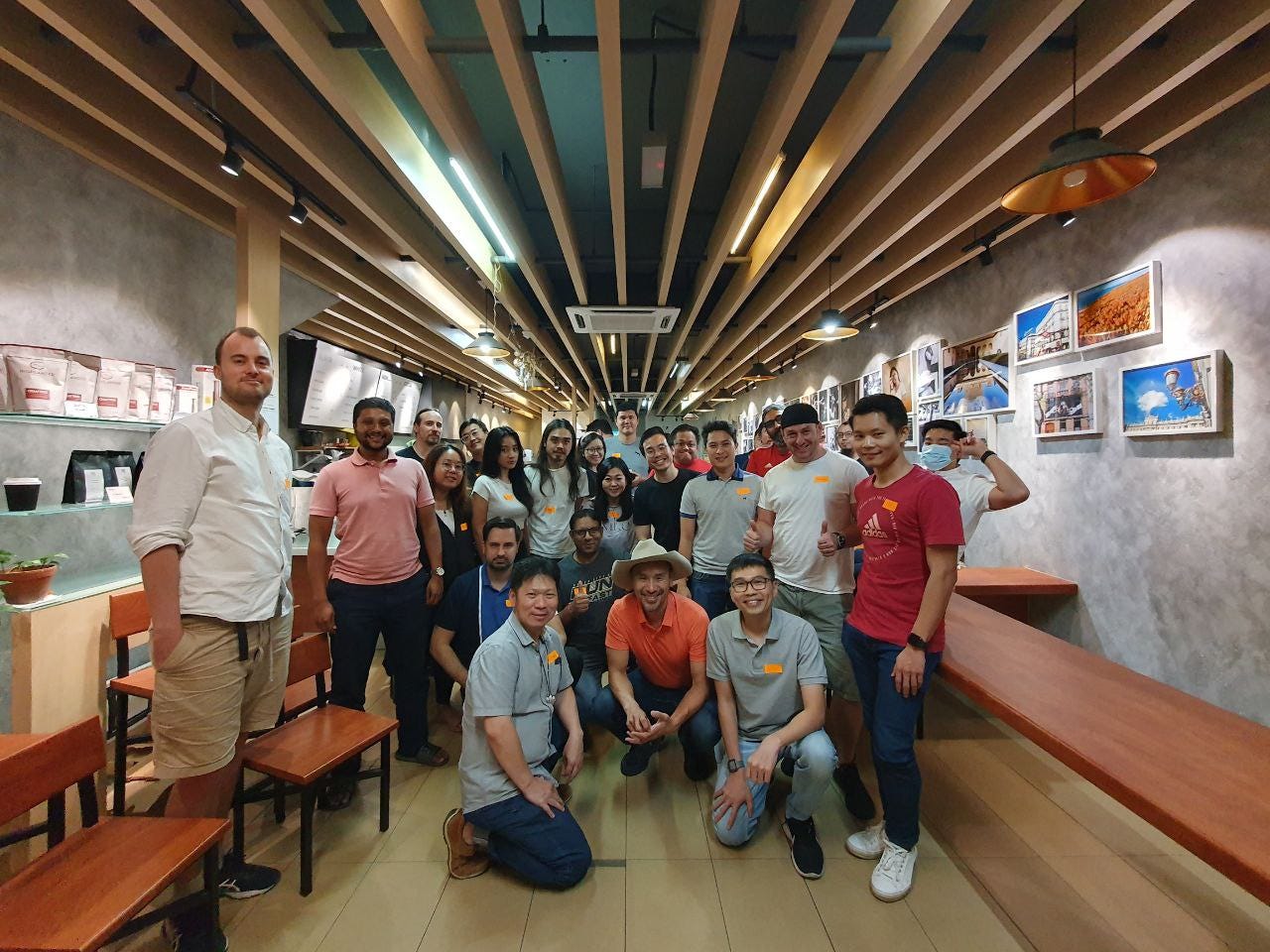
Global Level Incentives - My latest article for Bitcoin Magazine is the final one of a four-part series. I wrote about the dollar’s dominance and hegemonic control it has over the rest of the world, the consequences economically for the whole world and how it changes the incentives for different nations. The article was sobering for me to write, being an American, as I’ve come to realize that so much of what’s wrong with the world today can be squarely laid on the centralized control of the dollar.
LightningCon Vietnam - I will be in Da Nang next week for the first Lightning Conference in this region! As with most places in the world, the altcoin conferences vastly outnumber the Bitcoin-only conferences and they’re about as slimy as you’d expect. This one will hopefully start the trend of better conferences around the world. It’s also very affordable, so I’d encourage you to come if you can.
Indonesia - I’m in Bali this week and we have another meetup here on Thursday. The meetup in Kuala Lumpur was a lot of fun and we had a lot of good conversation, coffee and tea. The Bali meetup will be a blast near the beach and we’ll figure out the program the next couple of days. Looking forward to seeing you if you can make it!
Nostr Note of the Week

One of the advantages of the Nostr platform is that I can write longer pieces (and not have to pay Twitter for the privilege!) and this one is something I’ve had to clarify my own thoughts from about a year ago.
Books I’m Shilling
Bitcoin
ECDSA vulnerability - This is a new vulnerability in ECDSA if you use k values that are linear with each other in multiple signatures. This is highly unlikely unless you have a bad random number generator, but it is intriguing that a private key can be leaked that way. The post goes into how the author tried to find any such combinations on Bitcoin’s blockchain and only found vulnerabilities related to re-used of nonce values and not having them be related. Perhaps this is a reason to move to Schnorr?
Mining Developer Kit - Block has been planning for an open source Bitcoin miner for a while and they’re looking at ways to make a developer kit for hardware. The idea is sound but requires a lot more hardware talent to play with this stuff. I know for myself, being a software guy, the hardware parts are intimidating and it’s difficult to know what options there are. That said, if the development kit is designed well, perhaps we can get nice little efficiency gains through community experimentation. It’ll be interesting to see how the industry develops along these lines.
Address Types - Unchained blog has an analysis of the different address types on Bitcoin. They go over each type, what they are and how much of it is on the network. What was surprising to me is how little is stored in P2TR addresses, which at this point is around 20,000 BTC compared to P2PKH, which has over 8 million. P2WSH is also not very popular with only 800k BTC stored in it. I would consider that the most secure as it’s got a lot of hardware support on its multisig.
Lightning
Micropayments - Brandon Lucas has a deep analysis of micropayments on Lightning, including why it’s necessary and what options exist today. I really found the different ways in which it can be done on Lighting enlightening (see what I did there) and the various tradeoffs that each of these methods has for micropayments. It’s crazy that the 402 payment required error code was implemented back in the early 90’s and 30 years later, we still don’t have a great way to take care of small payments to make content payment easy, but we’re getting close with Lightning.
Nostr as a Key Directory - Kollider Wallet makes it much easier to pay someone using their Lightning Address and now searches the Nostr network for NIP-05 verified ones! I’m hoping that Kollider can become a full-fledged Nostr client on top of a wallet so it can be a private e2e messaging app where we can pay our friends easily. I’ve been asking for an app like this for at least 4 years, so please, someone make it!
The Trusted Third Party - Matt O’Dell writes eloquently about the current state of the Lightning Network, which unfortunately uses too many trusted nodes to route transactions. The regulated entities like CashApp nodes only open channels with other regulated entities, creating some risk in making truly private routing difficult. The network perhaps isn’t as robust as it seems right now.
Economics, Engineering, Etc.
Circle has $3.3B Exposure - There’s probably a lot more contagion to go, but Silicon Valley Bank’s collapse, among other things, means USDC will be under-collateralized. Redemptions for the very large stablecoin will resume Monday and given the discount ($0.90) it was trading at, we’ll see just how much of the market cap will be wiped out by redemptions. There’s also the entire DeFi ecosystem to consider as well, as many of them more or less use USDC as a dollar substitute. As the Fed increases rates and waits to see what breaks, we’re in the same position, watching what will break in the broader altcoin ecosystem.
Mining Capital Management - The business of mining is tricky, and one of the trickiest is figuring out how much capital to hold in Bitcoin. The article goes into the various strategies, including using different financial derivatives. During bear markets, it turns out that many mining companies diversify their services to get different sources of revenue. What’s so interesting about this industry is that it really is a lot of small players and they really need tailored strategies based on what circumstances they’re in.
STM32 - The Bitcoin Manual points out an inconvenient truth about the most popular hardware wallets in that they all use the same microcontroller from STMicroelectronics. This Dutch company supplies Trezor, Coldcard and Ledger, which are probably the three most popular and this could be a significant vulnerability, even in a multisig setup. Other hardware like Jade and BitBox02 use a different microcontroller, which you may want to add to your multisig setup.
Quick Hits
Privacy on Nostr - I’m sure this will become a more important thing over time, but good to get started on it before you need it.
Hayes on Synthetic Dollar - Arthur Hayes wants to create a synthetic dollar that doesn’t require some custodian holding dollars and having that single point of failure. This has been tried many times and works fine until some stress really hits it. It feels to me like he’s trying to make a square circle.
Grayscale vs SEC - Seems the main result will be either both Futures and Spot ETFs or neither will be approved.
Mt Gox Delayed - Only a month this time, but it’s getting close to the 10 year anniversary!
Fiat delenda est.