
Bitcoin Tech Talk #336
Interesting Stuff

The Case for Staying Put - I’ve been traveling for the past 6 months so this was an interesting article for me to read, about the virtues of familiarity and how weak ties are a necessary part of a communal life. The disconnectedness that we all feel is largely due to this phenomenon of not having enough weak interactions. One aspect that I thought was enlightening is that most people only improve a house in a way that enhances resale value. This is a function of real estate being a store of value. In a deep way, finding meaning requires us to value things in non-monetary ways.
Why Weddings - Along the same lines, this is an article about the intangible benefits of a wedding. I’ve been a fan of weddings and encourage people thinking about them to have one. As the author discovered, he thought it would be a waste of money and found out that it contributed something much deeper to his life than he imagined. We’re very used to valuing things only from a monetary perspective because of the hold that fiat money has over us. But as this article shows, there’s value to be found that’s not monetary and it’s those things that are often the most meaningful.
Organized Fun - I guess that makes it three articles in the same genre, that of disconnectedness in modern society. This one is on the proliferation of “organized fun” or the structuredness of leisure that’s now so common. The article is pretty cynical, but makes some good points about the monetization of peoples’ boredom. In a way, the proliferation of these things reflects the much higher bar for entertainment people these days have.
What I'm up to

Bitcoin Vietnam Interview - I talked to Bitcoin Vietnam in preparation for the conference coming up later this week. I discussed the connection between Bitcoin and Christianity, and my latest book, "Bitcoin and the American Dream," which examines the role of Bitcoin in a world where fiat money is failing. I also talked about the hope for a peaceful transition to Bitcoin as sound money.
Thailand and Taipei - I’ll be traveling to Phuket and Chiang Mai next week and proceed from there to Taipei. There will be some meetups, so stay tuned for that. If you’re in any of these places, please drop me a note!
Thank God for Bitcoin 2023 - This promo video pumps me up and if you’re thinking about going, I would strongly encourage you to sign up. The conference was one of my highlights of 2022 and brought some very interesting conversations that you don’t typically get at other Bitcoin conferences. Given what’s going on with increasing authoritarianism, it’s more important than ever to be thinking about how to properly order our affections, particularly with respect to money.
Nostr Note of the Week

Books I’m Shilling
Bitcoin
Cashu - Bitfinex has a nice description of Cashu and the potential of Fedimint using a federated Chaumian e-cash. The main benefits of the implementation are that you get serious scalability, private transactions and cheaper fees. The tradeoff is that you get some level of centralization through the federation which has to be trusted, but you really do get a lot in return. Fees, for example, are cheaper than even lightning and privacy better than what you’d get in any privacy coin.
DLC Free Option Problem - DLCs have a free option problem in that one side does the offering and the other side does the accepting. The one accepting can delay the execution of the DLC for the best possible moment. This is unfair and does not make the DLC symmetric and the post here comes up with a novel solution using the oracle to release the adaptor signatures to both parties at the same time. This seems to me a lot more fair and I hope something like this becomes the standard.
Stateless Signing - Unchained blog has a very interesting article on how they got Ledger to check the validity of a multisig address. The method uses an HMAC to validate whether a particular seed phrase has approved a particular address and thus requires no registration or statefulness on the signing device! That seems to me a really elegant solution to validating almost anything on a stateless device, kind of like the character in Memento relying on recognizing his own handwriting, but more secure. I would like to see a BIP that makes this method more general.
Lightning
Lightning Prisms - Gigi describes how you can split payments underneath a single Lightning address. The idea would be that any payments to a publication address, for example, get split to the constituent authors, for example. It’s a very interesting idea as accounting for how to split profits is a lot of work. You can imagine, for example, that a split of profits on a podcast where the guest gets some portion of the profits would make a lot of sense. In a sense, this is a smart contract on lightning and some programmability would be very welcome.
Lightning Privacy - Voltage has a wonderful long-read on Lightning privacy and more importantly, how to think about it. As they point out, privacy is only as good as the anonymity set that you’re in. They then go through the various ways in which you can be identified, including leakage on the base layer, timing attacks and placing yourself in the middle. Lightning privacy is still something that we haven’t fully explored as the layer hasn’t been used in a way that pisses off the authorities yet. I expect that to change in the next few years.
LocalSats - This is a Lightning based LocalBitcoins that uses Lightning logins and anonymous posting. You can go and trade Bitcoin for cash, which should be a lot more decentralized. As more ramps to fiat get choked off in Operation ChokePoint 2.0, we’re likely to see solutions like this pop up organically and proliferate. We know, because we saw something similar happen in China when they started banning exchanges. If this method becomes popular, I think we’ll see extremely quick uptake on Lightning.
Economics, Engineering, Etc.
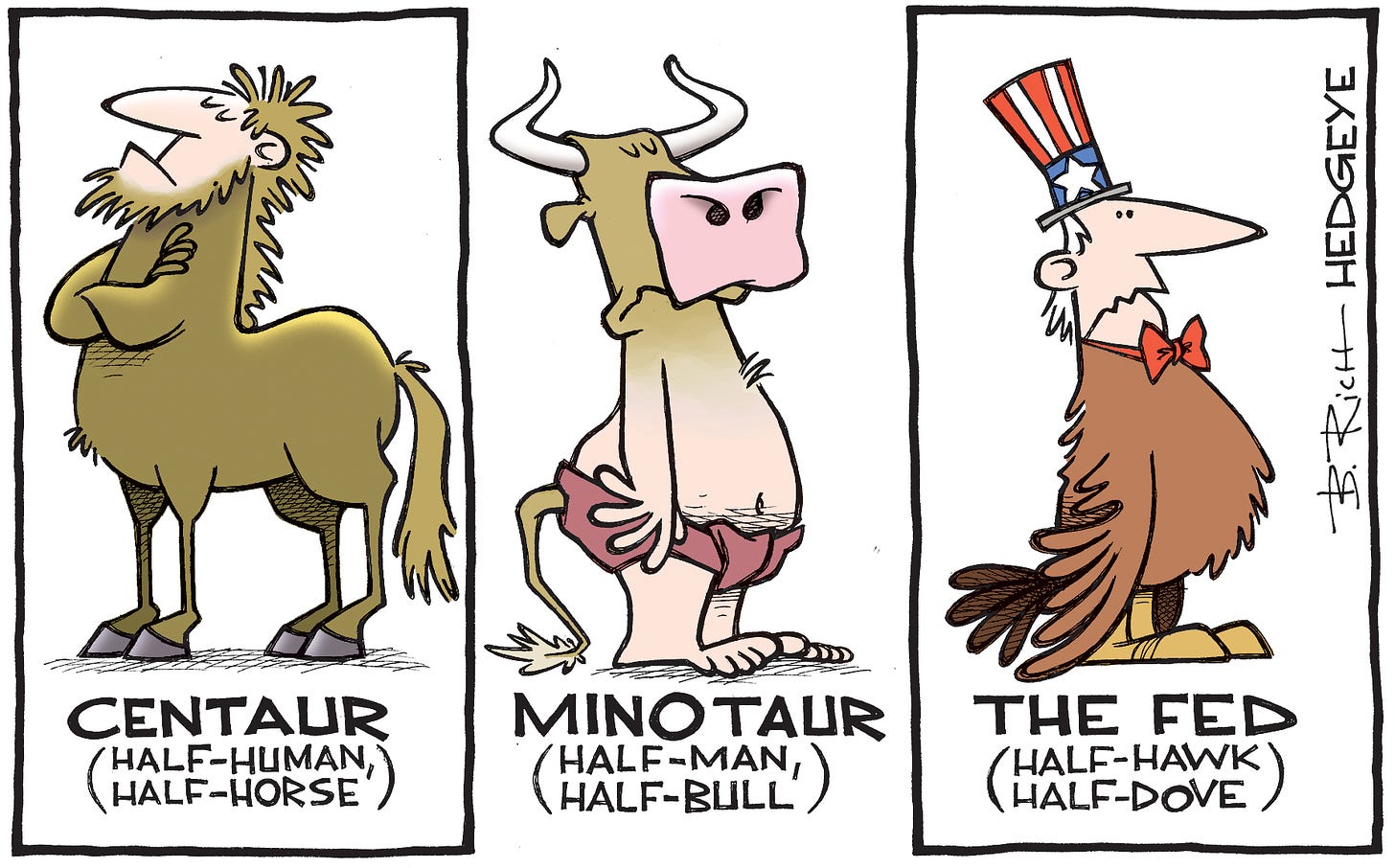
+$300B - The Fed’s balance sheet reportedly went up by this amount in the past week and we’re probably not done! There are more than a hundred banks that have the same or greater risk than Silicon Valley Bank and they’ll all need some loans to shore up their accounts. What’s more, the depositors at the smaller, non-systematically important banks will not be covered beyond the $250k limit as per Yellen, so we’re likely to see a run very quickly. The rate hikes are hitting these banks, and it’s in the security that they thought was the safest: US Treasuries. Any sort of bank run leaves them very vulnerable and the Fed loaning at par will only increase their balance sheet. Get ready for a crapton more printing.
Signature Bank’s Summary Execution - It really does look like Signature Bank was targeted by Operation ChokePoint 2.0 and destroyed for that very purpose. While plenty disturbing from a justice standpoint, the more perilous slippery slope at play here is that banks can and will be destroyed at the state’s discretion. The obvious end of all this is a single government bank and that, of course, means a CBDC. This is what authoritarian governments do is they start eliminating stuff they don’t like one-by-one. This is especially disturbing given that the state of NY is also looking to arrest the former president.
Is Bitcoin Ossified? - Jameson Lopp asks the very important question of whether Bitcoin is now ossified. He argues in this Forbes piece that we shouldn’t be done and that there are more changes to come. His point that we’re only 18 months out from the last major update is very fair and worth considering. I am a bit more skeptical than he is about being able to form a consensus on the next upgrade, as I think users are a lot more “activist” than in past years and will only get more so in the future, but the question of what’s worth upgrading is definitely a good question to ask.
Quick Hits
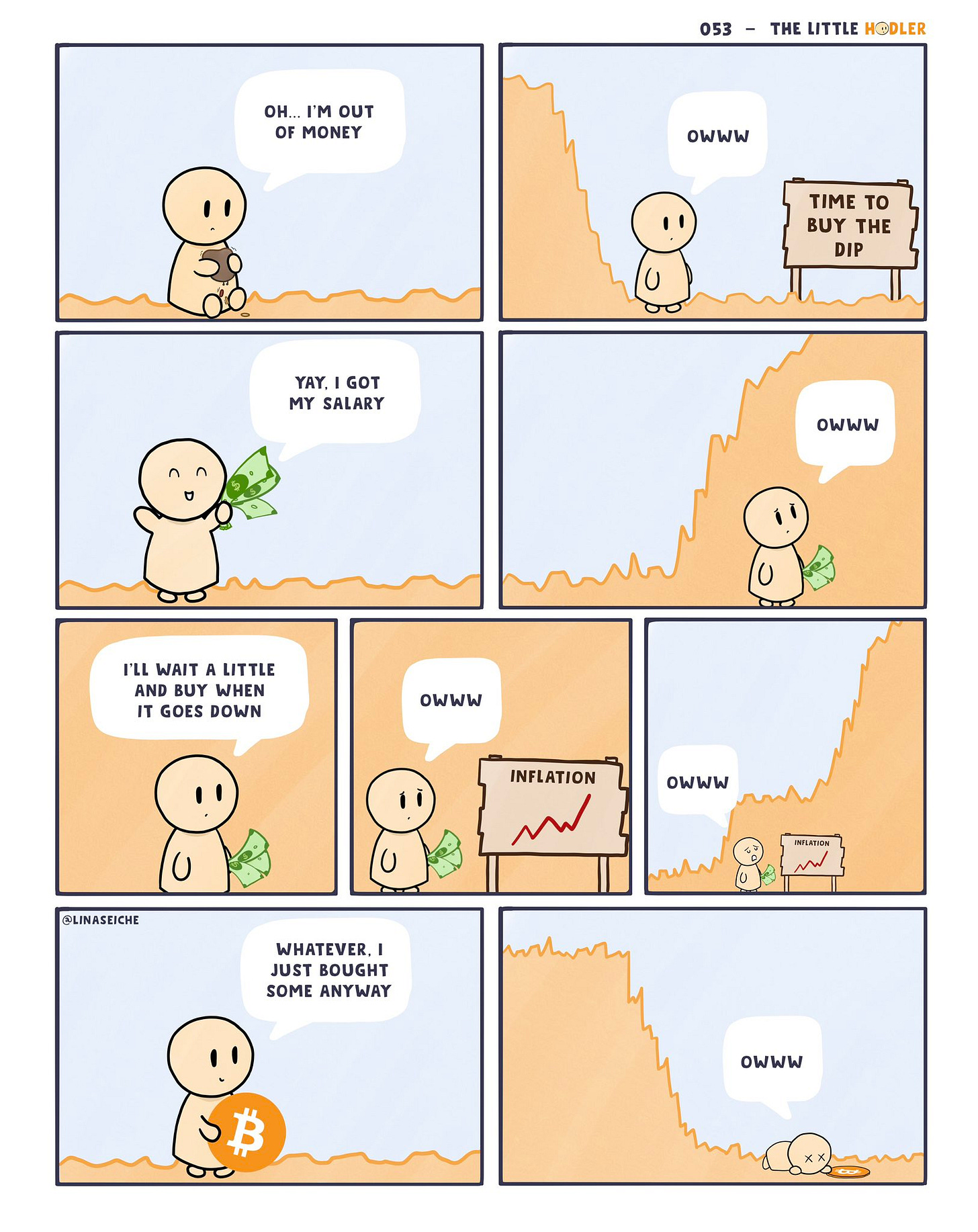
Balaji bets $2M on Hyperinflation - He might be crazy, stupid or both, but he’s not boring. Two bets of $1M each on USD hyperinflating in the next 90 days.
Dogecoin Exploit? - A cybersecurity firm claims there are vulnerabilities on Dogecoin, Zcash and Litecoin which can be exploited, but they’re not releasing any details.
Macro looking bad - Lyn Alden thinks big banks are in good shape but that smaller banks are in trouble.
Don’t Call it a Bailout! - Actually, you can and Ryan from Mises explains why.
Fiat delenda est.