Bitcoin Tech Talk #346
Interesting Stuff
Money and Morals - The article is a summary of the prevailing attitude of the money worshipers which is that of thinking money can buy essentially everything. Of course, this is untrue, and the article points out the debasement of certain relationships when money enters the equation. Though the article doesn’t mention it, the culprit for this attitude is fiat money, which has sadly become the false panacea for all problems. The article is well worth reading for the insight into the deep corruption that fiat money has produced in every institution.
Reflections on Identity - Luke Burgis takes his always poignant pen to the issues around discovery and identity. As he points out in this piece, our current mentality is that change comes from information or knowledge. But as he points out, it doesn’t. Change comes from experiences and we have precious little that transforms us as they should. We need more rites of passage, opportunities to reflect and to mark transitions.
Dumb vs Stupid - This article makes a very useful distinction between dumb (not having mental horsepower for evaluation) and stupid (not having the right framework for evaluation). As it points out, there are a lot of very intellectually accomplished people that are very stupid in some area. And it’s because they are using the wrong mental model for evaluation. The worst mistakes and the greatest evils come from stupidity and not dumbness. We could say, for example, that many smart people in other areas are stupid about Bitcoin because they don’t know how to think about it.
What I'm up to

Celebrity is Fake - I’ve been writing a lot of mini-essays and this one is on the substack “notes” platform. My argument is that most celebrities are not created by merit but are astroturfed. Even when it comes to fame, we should be verifying, not trusting.
The Bet - I’ve been asked about the bet with Joe Lubin by more than a few reporters so I’ll mention it here so I don’t keep repeating myself. We agreed to a bet in 2018, I followed up several times to finalize it including once on Laura Shin’s podcast. He backed out of finalizing each time. At Consensus 2019 we once again had a handshake. I kept trying to get the bet finalized after that appearance, but he kept trying to change various terms. My final email attempting to finalize was still about a dispute on how to define an active user. He never responded and that was August 2019. I shared that the bet wasn’t finalized multiple times since then, including on Peter McCormick’s podcast. And no, I have no idea who would have won since we couldn’t agree to the terms.
New Zealand, LA, Austin - My final stop on this world tour is in New Zealand. I’m in Auckland for a little bit longer before heading back to the US for the first time in 9 months. I’m not excited about the rampant inflation, but I am excited to come back home and see friends I haven’t seen in a while. I’ll be working out of the Bitcoin Commons in a couple of weeks. I’ll also be in LA for Swan Salon on June 1. If you are subscribed to their private events, you’ll know where to go and what the topic will be. If you are in the area and would like to attend, please reply to this email and I’ll see what I can do.
Nostr Note of the Week

What I’m Shilling

Unchained Capital is a sponsor of this newsletter. I am an advisor and proud to be a part of a company that’s enhancing security for Bitcoin holders. If you need multisig, collaborative custody or bitcoin native financial services, learn more here.
Bitcoin

Bitcoin Core 25.0 - New version of Bitcoin Core is out and there are a number of bug fixes and updates. The main thing that looks interesting to me is the ability to better use compact filters. The idea is to allow a wallet to do a fast rescan of the blockchain to get its collection of UTXOs and historical payments. It’s not exactly an address index, but it should allow for reasonably quick scans when looking for transactions that involve a particular ScriptPubKey.
Ark Announcement - Burak posts on his new layer 2 design and how it came about. The main issue that the design was trying to solve for is the inbound liquidity requirement of Lightning. At present, that’s the part that makes the user experience most difficult. The design does seem to have some dependency in the use of Ark Service Providers. That said, there are coinjoins every round and the privacy then should be quite difficult to break. The interoperability with Lightning is, for me, the most intriguing part and it may very well be the feature that advances its adoption.
Fedi Alpha - Fedimint is now available for testing on Mutiny’s signet (see below). The main idea here seems to be that it’s not just another layer two, but a building block for a whole set of bitcoin based apps. What’s interesting for developers is that they’re offering single-click dev environments. That sort of tooling is essential to get developer adoption and given its instantaneous transfer and anonymity features, it really could gain some momentum. But as with Ark above, there’s a lot of competition here and bootstrapping anything new like this will take time.
Lightning
Liquid Swaps - One of the results of the crazy fee environment we had this past month is the innovation in different areas and this was one of the most interesting. Boltz started using Liquid to rebalance their channels. The main idea is to use L-BTC to open channels given how cheap the fees are there. It really does make more sense to use this resource and if it adds more liquidity to Lightning for cheaper, this could become a whole different arbitrage opportunity for payment routers.
Mutiny Wallet Signet - Mutiny is now available for testing on their own Signet. The most intriguing part of the wallet is the ability to receive payments without opening a channel first. Connecting to arbitrary Lightning nodes and opening channels with them also seem to be an integral part of its design. The wallet reminds me of the more advanced Bitcoin wallets that allow you to select which UTXOs to spend. The appeal to power users is great as most Lightning wallets hide too many details that may be important.
Security of low LN payments - BitMex Research has a really good article about the security of a lightning payment given its ability to enforce payments on chain. The basic fear is that when you have a LN payment below the current fees on chain, it may not be enforceable since an on-chain settlement transaction will cost more than the payment itself. As BitMex shows, this really only applies to payments that are in flight and not to payments that have been routed. Thus, the only risk is really for payment routers who can get “griefed” by trolls that want to waste the payment router’s resources. In a sense, the people that brought up this fear don’t really understand how Lightning works.
Economics, Engineering, Etc.

Web5 - TBD has released their Web5 toolkit and it’s got a lot of interesting components for self-sovereignty. There’s the self-sovereign identity SDK, which lets you define an identity that can be used on this platform. There’s also decentralized identifiers which let you locate resources on this platform as well as a decentralized web node that can store these resources. The idea is to be very different than the current web and not rely so much on centralized servers. For developers, this is definitely worth looking at.
Nomen - This is a protocol for DNS-like registration on Nostr. The interesting thing is that there’s no one that enforces which name goes with what npub, except by indexers. Indexers are free to ignore claims by squatters and so on, which sets up some very different incentives than we have on the current DNS system. It’s not worth it, for example, to route a name to an npub if there’s no content so it might just get ignored by most indexers until there’s something there. Should this standard get implemented, the decentralized order that emerges will be the most interesting part of the experiment.
Chainalysis Legal Standing - Tornado Cash developer Alexey Pertsev is going to challenge the Chainalysis tracing of various payments that allegedly link him to illegal activity. This will be in an important legal precedent and one to watch as the reliability of this tracking method will be put to scrutiny. The actual activity isn’t on Bitcoin in this case, but it will give some indication of the methods that Chainalysis uses.
Quick Hits
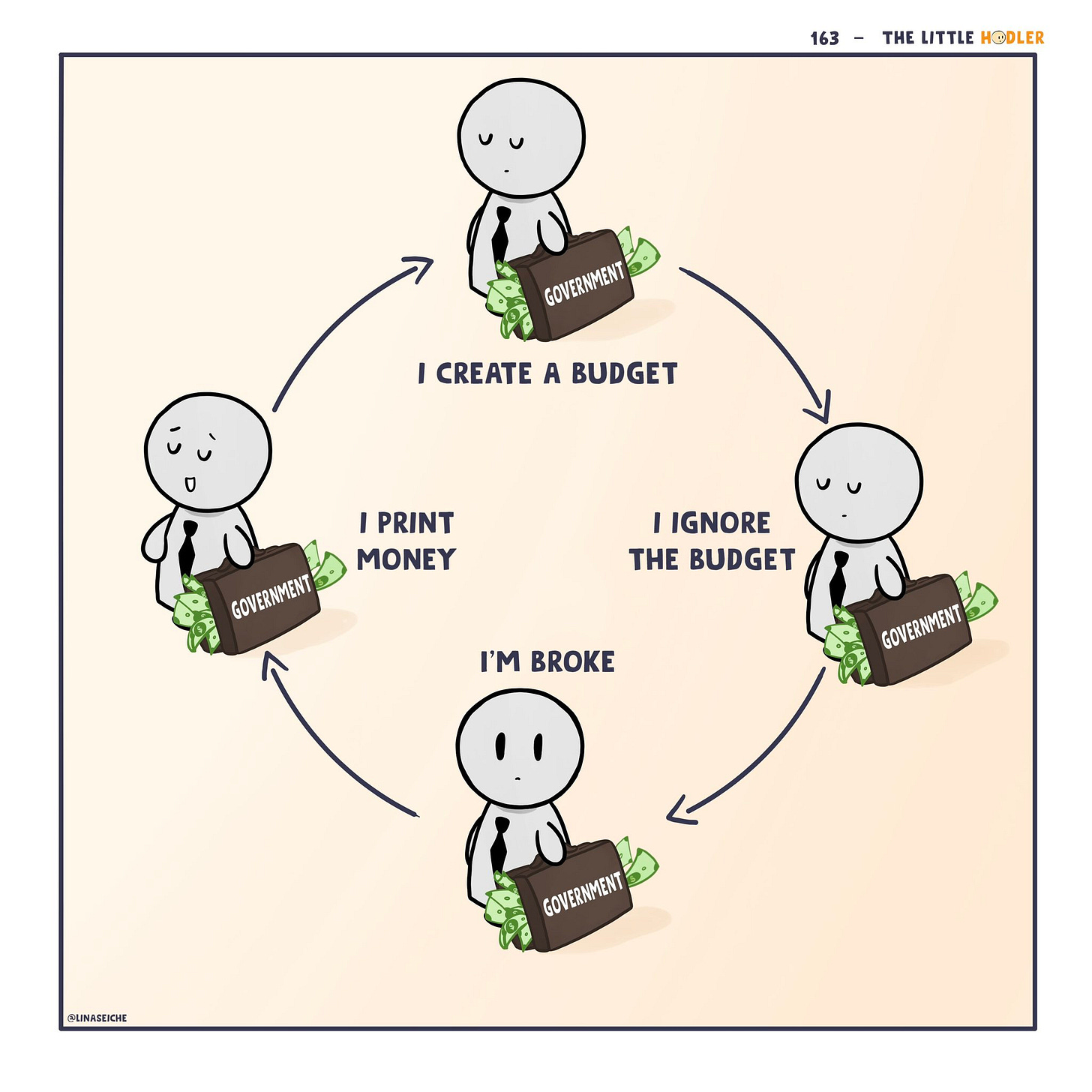
Blockstream doing well - Their quarterly letter is impressive in its broadness and they have a lot of different products that seem to be making a lot of progress.
Do Kwon Bail Revoked - Do Kwon’s hope for freedom was dashed once again. We still await whether he’ll get extradited and where.
Private Nostr DMs - Using different public keys for each pair of communicants, you can essentially get privacy on DMs where no one knows who’s communicating with whom.
Miniscript in Go - When I was implementing Miniscript in Python, there was only the C and Rust implementations, so good to see more.
DCG misses payment - Gemini is still waiting for $630M from DCG. The stupid games and their stupid prizes continue.
Fiat delenda est.