Bitcoin Tech Talk #349
Interesting Stuff
Uyghur Experience - This is a haunting tale of what it’s like to be living with uncertainty about your own status with a dictatorial regime. The entire story is just gripping and reminded me a lot of the accounts I’ve read in totalitarian regimes. The remarkable part of the story for me was how tiny things could get you in trouble and that there was an assumption of guilt by the authorities and very little justice seemed to be upheld.
AI Danger - To me, this was AI hysteria at its worst. If you study history almost all useful new technology is followed up with a healthy dose of fear and AI is no exception. Electricity could kill an elephant! Microwaves will take all nutrition out of food! Computers will become our overlords! Cell phones will give you cancer! I usually like Eric Hoel’s writing, but it’s clear to me that he’s being chicken little here. Evil comes from people, not technology and we should be very wary of people blaming tech.
UFO craze - Remember the UFO stories a week ago? Turns out that a lot of it was from Harry Reid’s (former majority leader in the Senate) pork barrelling some funds to a friend of his that was obsessed with UFOs. The entire story from nose to tail is because of government nepotism and corrupt journalism. I suppose this is par for the course with oodles of fiat money available, but it’s still hard to believe how insanely prevalent this is. It does make you wonder what they want to distract us from.
What I'm up to

Decentralization and Natural Law - I’ve been thinking a lot about the need for bottom up systems as centralization crumbles under its own weight and wrote this short essay on Nostr. My basic argument is that in the absence of centralized law, what you get is decentralized law, or natural law. It’s way more robust, more fair and removes so much of the corruption associated with centralized law. In that sense, Bitcoin is a form of decentralized law. But more than that, decentralization leads to not man-made realities like governments but to reality that already exists, and for me, it’s yet another proof of the existence of God.
Fiat Ruins Everything - Now that I’m back in Austin, I’m working hard on the book and getting all the edits in. I’m now in the middle of citing references for some of the things I write in the book and honestly, it’s a bit of a slog. If anyone has good resources to help in gathering references, I would appreciate it. I’ve found that it’s very hard to verify these things with AI, so if there’s a way to do that, that would be great as well.
CUBO+ - I’ll be in El Salvador next month to teach some Salvadoran students the Bitcoin protocol! I’ll be attending a meetup for Max and Stacy on July 15th. If you’re in town, please let me know as there very well may be a dinner of some kind.
Nostr Note of the Week
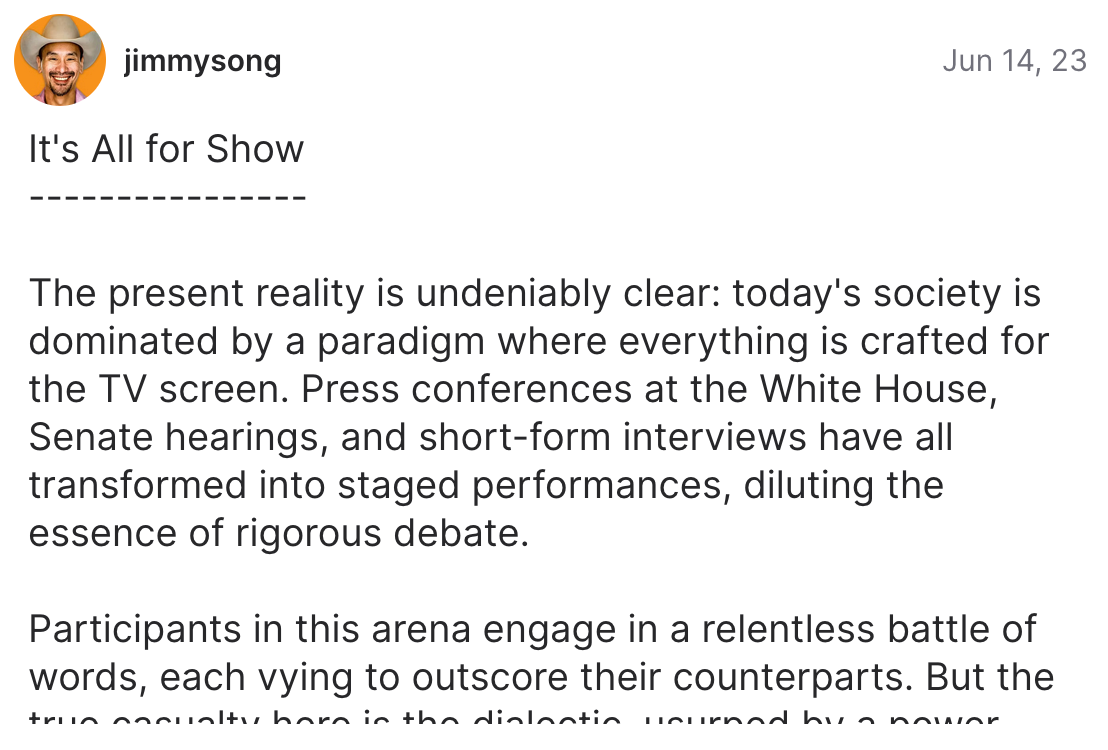
What I’m Shilling

Unchained Capital is a sponsor of this newsletter. I am an advisor and proud to be a part of a company that’s enhancing security for Bitcoin holders. If you need multisig, collaborative custody or bitcoin native financial services, learn more here.
Bitcoin
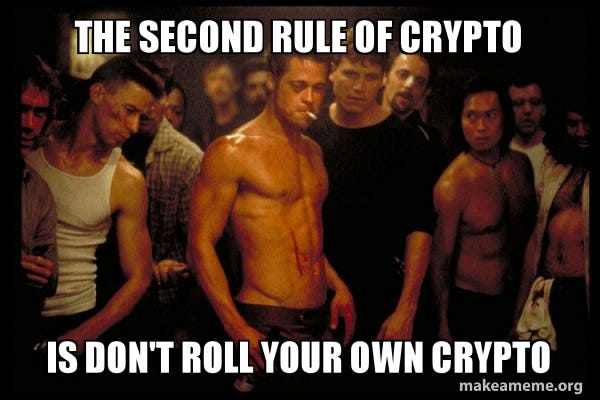
ECDSA vulnerability - Apparently, there’s a method to recover the private key from a single signature if the nonce is of a certain form. The particular form of signature is present in the Bitcoin blockchain 90,000 times in 900 separate addresses and in use from 2015 to the present, accounting for around 222 BTC. The authors of the paper suspect that it’s a custom implementation which uses this nonce and that’s what causes the vulnerability. As usual, don’t roll your own crypto, especially something so incredibly important as nonce-generation.
BitKey - This is a new hardware wallet that surprisingly doesn’t have a screen. Honestly, the product announcement and integration brings up more questions than it answers. Can we put in our own key into the device? Can we extract the key from the device? How do we verify that change addresses? Hopefully, the release of the product will answer some of these questions and this product becomes one of the many to secure multisig setups. There’s a beta program to receive one of these devices for testing.
Bitcoin PoS - No, not a story about turning Bitcoin into proof-of-stake, but a point-of-sale system using Bitcoin. This is something that makes sense for places like El Salvador which doesn’t have much credit card PoS machine penetration and will make the means of payment use case much stronger. This is a crowd fund on Geyser using Lightning. I would love to be able to use a machine like this for when I go to Bitcoin conferences to sell my books.
Lightning

Taproot Assets - Lightning Labs has released the specifications for the Taproot Assets protocol (formerly known as TARO, but changed because of the lawsuit from TARI). The most interesting part is the sparse Merkle tree concept, where you can prove that something is *not* in the tree. The whole concept is pretty clever and the idea is that you can trade these assets via Lightning and the protocol is open for business.
Lightning using an HSM - If you were securing $100M on the lightning network, how would you design the node? That’s the question acinq answers in this very interesting blog post. HSMs are hardware security modules where it’s pretty much impossible to get the keys off of, but they sign according to some rules. This is a common piece of hardware for banks (they cost upwards of $100k each), but isn’t used as much in the Bitcoin space, except by a few exchanges. This is the first time I’m hearing of it being used in the context of Lightning. I’m surprised it’s taken this long since they’re such good fits for each other.
Channel operation and closure - Elle Mouton has a wonderful article detailing the normal operation of a pre-Taproot channel, including how HTLCs are used to commit to a new state. There’s also a good description of cooperative channel closure and lots of diagrams to understand exactly how money goes from Alice to Bob and back. There is a 25 step process with diagrams describing the exact process by which payments using HTLCs are made. Worth reading to understand the exact mechanics of Lightning channels.
Economics, Engineering, Etc.

Inflation and Interest Rates - Lyn Alden asks the very important question about the relationship between consumer price inflation and interest rates. The Keynesian dogma is that when there are high interest rates, inflation slows, but she argues that this is not necessarily the case as consumer price inflation is often the result of technological stagnation and societal dysfunction. The problem here is that the definition of inflation has been changed by academia to no longer mean monetary expansion to something much harder to measure. The result is that the thing being measured has a lot of various inputs. Thus, as she argues, we get unintuitive outcomes like prices going up even as interest rates go up.
Ordinals Economics - Roy Scheinfeld goes over all the details of what ordinals are and why they’re controversial. The article has some technical details, but the more interesting thing for me was the economic analysis of the situation. Roy notes that the money-ness of Bitcoin is diminished a bit when ordinals are being used. But as he points out, there’s no real difference between that and a physical US dollar bill, which have serial numbers. In that sense, ordinals are valuing a particular serial number bill, which is about as dumb as it sounds.
Blackrock ETF - There’s some controversy about whether it’s a trust or an ETF, which Allen Farrington here gets into. The main concerns he raises are about Blackrock overwhelming the Bitcoin community by making their product the de facto Bitcoin and using that as leverage to make certain “tainted” Bitcoins undesirable. This is a company that’s filed hundreds of these applications and has only been rejected once, so there’s good reason to believe that they’ll succeed where others clearly haven’t and there’s a very good chance that they have some other agenda.
Quick Hits
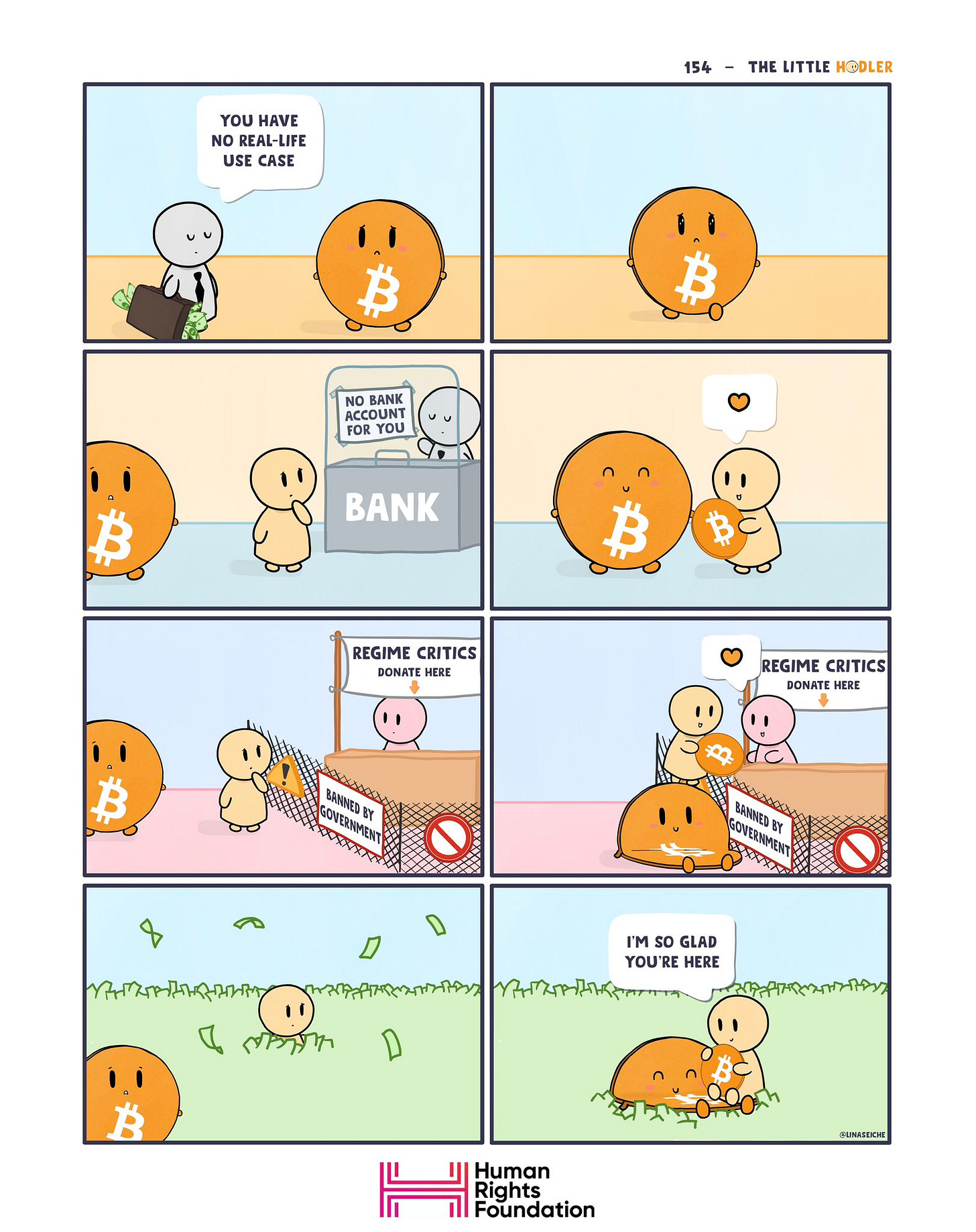
Taleb on Bitcoin - Nassim Taleb continues his villification campaign as he now says it’s not even good for money laundering.
Damus Banned - Apple’s very uncharitable ruling about lightning being a payment within the app has made it so that this very popular Nostr app will be banned in the next 2 weeks.
Fed Not Cutting - The Fed is holding rates around 5-5.25%, meaning that there’s no crazy printing in the near future. Of course, now that the debt ceiling is suspended, this will likely not last.
Arthur Hayes on Fragility - As usual, it’s an entertaining long read, this time about exit liquidity from the giant fiat shell game of investing.
Fiat delenda est.