
Bitcoin Tech Talk #514
Interesting Stuff

-
Incentives are for Losers — Adam Mastroianni contends that people requiring external rewards demonstrate weak moral character. He argues genuine integrity transcends reward structures, yet most lack authentic convictions beyond absorbed cultural attitudes. The author identifies fiat systems as problematic for treating monetary incentives as paramount, often masking high time-preference choices. Developing meaningful lives demands principled commitments despite hardship and inconvenience, moving beyond simplistic economist models of human nature.
-
Young adults are Poor — Johann Kurtz documents social capital erosion from 1950s-70s onward through collapsed community institutions like churches and unions. Young people now individually purchase what previous generations obtained through community bonds. Notably, wage productivity divergence occurred in 1973, two years after Nixon's gold window closure. Financialization hollowed both economic structures and civic communities, forcing costlier substitutes for previously affordable goods and relationships.
-
Fertility and Currency — Dave explains baby bonus failures through fungible money's competition with other consumer desires. Historically, children provided non-fungible rewards including status and community standing. Examples range from Taiwanese lottery winners to Diablo III's economy disruption. In fiat systems where everything carries a price, status allocation depends entirely on financial metrics, discouraging parenthood when children yield no social prestige.
-
The Perfect Recipe — Raw Egg Nationalist posits whole-ingredient cooking surpasses even exercise for health transformation. Kraft-Heinz and General Mills weaponize food science via hyperpalatable products while FDA GRAS loopholes approve ~10,000 additives Europe rejects. This engineered, addictive fiat food creates massive health consequences. Home cooking represents food sovereignty akin to running personal nodes, with 70% American overweight rates proving outsourced control's cost.
-
A New Revolution — John Carter argues Civil Rights legal framework racial spoils resist electoral change, exploring viable revolutionary approaches. He advocates decentralized, leaderless swarms mirroring Canadian trucker convoys with specific objectives. As a Bitcoiner reading this, the alignment with Bitcoin's framework appears evident. Financial crises occurring every 8-10 years could serve as catalysts, though interestingly Carter never explicitly connects these observations to cryptocurrency solutions.
What I'm up to
-
BIP110 Split Stream — Jimmy Song appeared on Tone Vays's livestream during the BIP110 split observing notable dynamics. The BIP110 chain failed to prevail through game theory as many miners refused signaling. The key takeaway: proponents obtained their desired chain. Currently, inserting large spam transactions remains difficult because miners remain non-public and network nodes enforce spam filtering.
-
Mr. M Podcast — Jimmy Song discussed recent Bitcoin developments including the BIP110 split and ColdCard vulnerability. The conversation extended philosophically to life perspectives and bear market dynamics beyond technical details.
Nostr Note of the Week

Bitcoin

-
BIP460 — Fabian Jahr formalized cross-input signature aggregation (CISA) as BIP460, enabling taproot key path spends in new SegWit v2 outputs combining signatures across inputs. Each input selects half-aggregation, full-aggregation, or explicit opt-out. Practical benefits include smaller transactions and cheaper consolidations. Privacy advantages emerge as coinjoin-style collaborative transactions become economically rather than merely ideologically attractive. Current low-fee environments limit immediate savings, but rising fees would activate this pressure release valve.
-
ChillDKG — ChillDKG draft BIP from Blockstream Research provides distributed key generation for BIP 445's FROST threshold signing. Multiple parties can establish k-of-n keys where no single participant views the complete result. The deliberate non-robust design prioritizes session termination with identifiable blame over silently excluding honest participants, preventing malicious coordinator interference. Threshold Schnorr multisig appearing as single on-chain keys benefits both privacy and self-custody, though the ceremony itself carries key leakage risks through operator mistakes.
-
Coldcard Post-Mortem — Wizardsardine delivers comprehensive analysis of the Coldcard disaster. A March 2021 linker binding bug silently replaced hardware TRNG with MicroPython's software PRNG on Mk2/Mk3 devices, leaving seeds with roughly 2^22 candidate states. This ~3-second GPU crackability affected 1,082 BTC swept July 29th. The irony: XORing two deterministic generators added zero entropy, surviving nearly two thousand days without symbol resolution verification across submodule boundaries.
Lightning

-
Blockstream Swaps — Blockstream launched swap infrastructure filling Boltz's absence, offering submarine swaps into Lightning, reverse swaps outbound, and trustless chain swaps between mainchain and Liquid BTC. Built on HTLCs ensuring both-parties-settle-or-neither execution, the self-custodial design prevents intermediary fund holdings aligned with Bitcoin principles. Every infrastructure piece eliminating counterparty trust represents progress against fiat finance's pyramid of rent-seeking middlemen, though ecosystem lessons on service redundancy remain critical.
-
LND Disclosure — Prior to v20.0, LND forgot collaboratively closed channels after one confirmation, allowing 1-block reorgs to broadcast revoked states without penalty, enabling attackers to capture entire channel balances. Specification requires six confirmations, indicating implementation failure. This highlights that Lightning's security model depends entirely on implementation adherence. LND node operators should upgrade following the near-reorg during BIP110 disagreement.
-
LIGHTNING.pub — Nostr-native Lightning node design enabling individuals to operate payment hubs for circles, families, and customers via encrypted Nostr relay connections. Nostr simplifies port forwarding, Tor, and DNS wrestling. Their premise: Lightning node operation shouldn't lose money ideologically. Running routing nodes has historically represented unprofitable activism. This trust model remains operator-dependent, yet existing relationships justify complexity reduction for financial reward.
Economics, Engineering, Etc.
-
DIY Signing Device Conference — Keith Mukai reports São Paulo's inaugural DIY signing device summit hosted by Vinteum with HRF support. Specter DIY, SeedSigner, Krux, Satochip, and Jade DIY teams chose collaboration over competition, becoming embit library co-maintainers after Stepan Snigirev's departure. The guiding principle—"every convenience is an attack surface"—drives building signers from commodity parts defeating supply chain attacks, avoiding customer-data honeypots accumulated by retail vendors, and functioning in regions where branded wallet ordering proves expensive or dangerous. Recent ColdCard and Trezor incidents demonstrated this conference's timeliness.
-
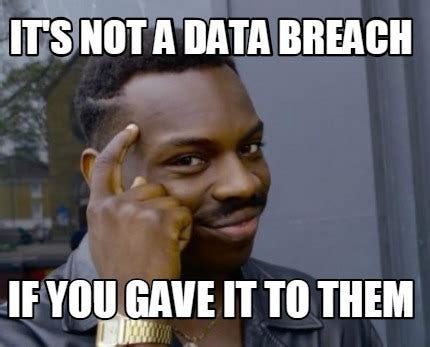
Trezor Data Breach — Trezor disclosed ShipMonk logistics breach exposing names, phone numbers, emails, and addresses for approximately 13,689 customers across seven countries ordering May-August. Trezor's 90-day retention policy limited exposure, mirroring Ledger precedent where hardware wallet customers self-identify as Bitcoin holders. Leaked address lists facilitate phishing and wrench attacks. Expect fraudulent "urgent security" emails, particularly targeting France residents.
-
Tracing the Coldcard Drain — Praveen Perera demonstrates impressive forensic work reverse-engineering Coldcard Mk3's weak RNG path, recovering 328 seeds explaining 87.7% of 1,082 BTC swept July 29th within 41 minutes. The attacker weaponized years-old latent vulnerability predating public awareness. Forensic fingerprints suggest unsophistication: single transaction builder, BlockCypher API defaults visible in address capitalization, value-ranked job queues indicating Ethereum account model thinking rather than UTXO expertise. Justice prospects remain viable.
Quick Hits

- Network Resilience — New paper examines Bitcoin network resilience against contentious soft forks.
- Red Team Publicity? — Article questions the acclaimed AI-powered Bitcoin "red team."
- Strategy's New Strategy — Strategy's latest 8-K discloses additional at-the-market share issuance alongside bitcoin sales near local lows.
- Proof that Humans Suck at Entropy — Interactive game demonstrating machines consistently predicting human random binary outputs after several dozen attempts.
Fiat delenda est.